MALTANALYZER

GET A CLEARER PICTURE OF YOUR MALT QUALITY

With the MaltAnalyzer from UNIT-ONE you can examine the modification of the malt – the breakdown of the grain’s cell structure that takes place during malting.

UV light and image analysis help you assess the sample and provide a basis for quality control.

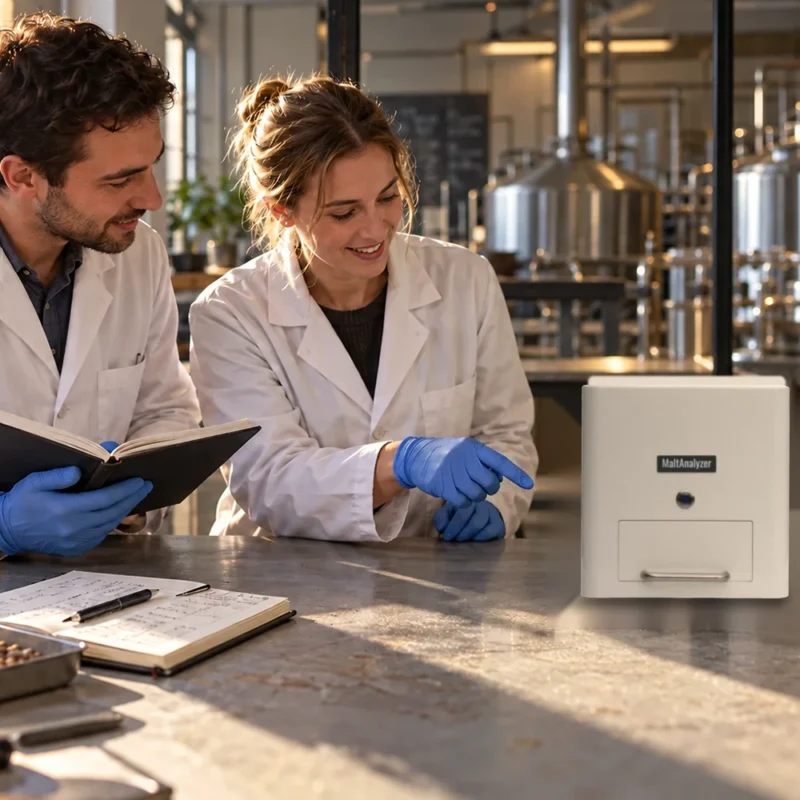
Laboratory technicians analysing malt with the MaltAnalyzer

BENEFITS OF THE MALTANALYZER

Less manual
analysis work

Automated processes support the analysis and save time in the laboratory.

Easy to operate
in daily lab work

User-friendly operation makes the instrument accessible in everyday work.

A better basis for comparison

Use the analyses to examine differences between malt samples and to monitor quality.

What does the analysis show?

During malting, parts of the grain’s inner cell structure are broken down. This is called modification, and it affects how the malt can be used further on in the process.

The MaltAnalyzer uses UV light and fluorescence to examine the halved malt kernels. With the cut surface facing up, the inside of the kernels can be analysed, giving you a picture of the modification in the sample.

As a laboratory technician, you get help assessing how homogeneous the malt is and examining differences between samples. This gives you a better basis for monitoring quality and passing any deviations on to those responsible for production.

FROM SAMPLE TO ANALYSIS

Prepare the sample

The malt kernels are halved and prepared for analysis.

Place the sample

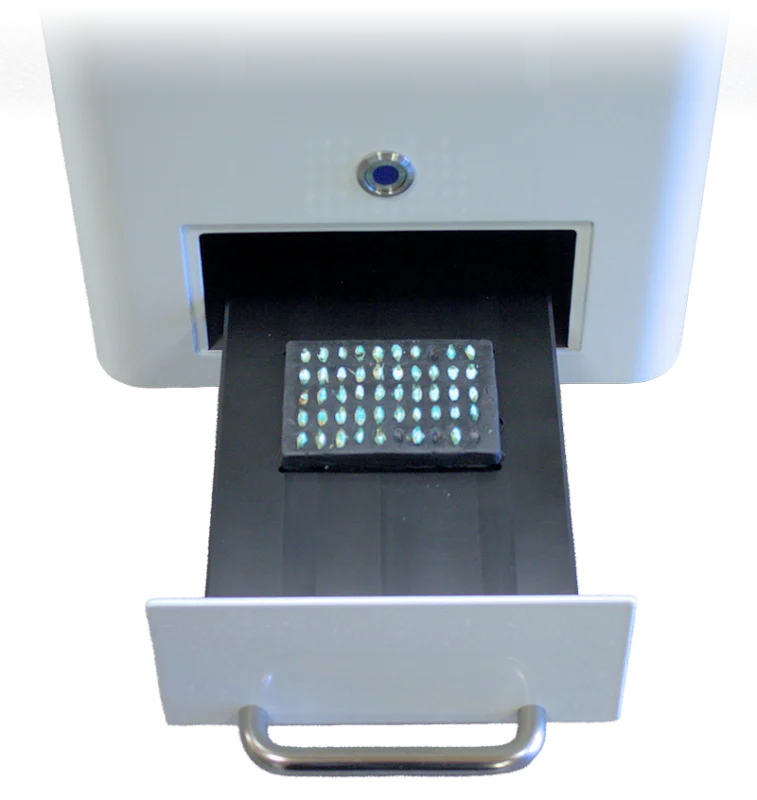
The halved kernels are placed in the sample holder with the cut surface facing up.

See the result

The sample is analysed, and the result is used to assess the modification of the malt.

Analysis of malt

See what the analysis tells you

A concrete analysis result makes it easier to understand the knowledge the instrument provides.

What do the markings show?
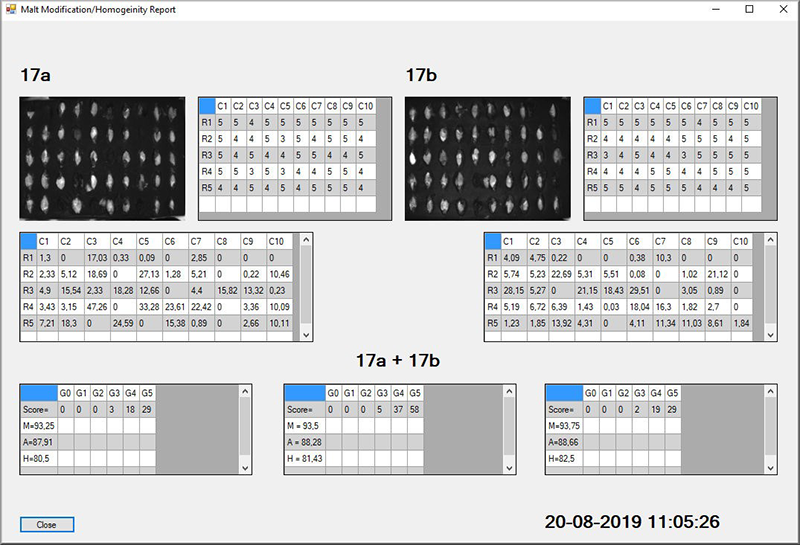
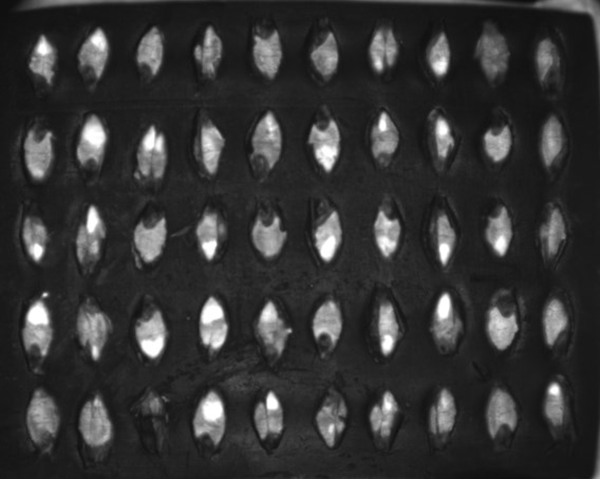
The black-and-white image shows a sample block under UV light: 50 halved, stained malt kernels in a 10 × 5 grid. Unmodified cell walls fluoresce brightly, while modified areas appear dull. The software measures every kernel and places it in a modification class from 0 (unmodified) to 5 (fully modified). The first table shows the class of each kernel, row by row (R1–R5) and column by column (C1–C10), and the second table shows the measured unmodified area of each kernel. Two blocks, A and B, are analysed and combined in one report, so the result is based on 100 kernels.

What should you look for?
The Score line at the bottom shows how many kernels fall into each class (G0–G5). From this the program calculates M = Modification and H = Homogeneity using the Carlsberg Modification and Homogeneity method. A high M means well-modified malt, and a high H means the kernels are evenly modified. Many kernels in the low classes, or large differences between kernels in the same block, point to uneven modification. As an example, the demo sample 140A gives M = 97.75 and H = 90.4.
WHAT YOU CAN USE THE ANALYSIS FOR

Examine the modification

Gain insight into the changes inside the malt kernels as a supplement to the laboratory’s other tests.

Assess homogeneity

Take a closer look at differences between
the kernels in the same sample, and
examine the variation.

Compare malt samples

Examine malt from different
deliveries under comparable
analysis conditions.

Get a walkthrough of the MaltAnalyzer

Want to know whether the MaltAnalyzer is right for your laboratory? Tell us about your samples and needs, and we will go through the options together.

You will get an insight into sample preparation, operation and analysis results. We also offer training, technical support and maintenance, so you have help with both start-up and daily use.

Per Ove Poulsen
Owner and developer at UNIT ONE

Mobile phone inviting you to connect on LinkedIn

Let's stay in touch on LinkedIn

Do you work with laboratory analysis, quality control or vision technology? Connect with me on LinkedIn – I’m happy to share experience and talk about your professional challenges.

We will place a tasty cookie in your browser when you use our website. It's there for purely technical and statistical reasons. No personal information will be collected.